
Here is everything you need to know about how your new fence or deck is protected.
Logistics, Permits & Property Lines
Q: Do I need a permit for my new fence or deck, and who handles it?
A: Most local counties require a building permit, but not all. For residential projects, Abbey handles the entire permitting process for you from start to finish. For commercial projects, the property owner or general contractor is responsible for securing all necessary permits.
Q: Do you obtain permits for fence and deck projects?
A: Yes, we handle permit applications for residential fence and deck projects. We do not obtain permits for commercial projects. Homeowners should always verify whether their fence or deck contractor will be obtaining the required permits, as not all contractors provide this service.
Q: Do I need a property site plan for the permit process?
A: Yes. A property site plan is often required when applying for a permit. You may be able to find a copy among your home closing documents, through your local county records office, or by purchasing one from MySitePlan.com.
Q: How do we determine where my property line is?
A: Property lines are typically determined using a property survey, site plan, or legal property documents. If property boundaries are unclear, we may recommend consulting a licensed land surveyor before installation begins. Abbey Fence & Deck is not responsible for determining property boundaries and assumes no liability for property line disputes, encroachments, or inaccuracies in information provided by the homeowner or third parties.
Q: What happens if there is a tree, heavy roots, or a steep slope along my property line?
A: We present a couple of options to make sure customers get exactly what they want—either a straight top line of the fence or a bottom that lies flush with the ground. Depending on their needs and the type of fence they choose, we’d be able to accommodate either of those requirements. However, this is something that should be discussed with your site estimator during the consultation, as every property and installation condition is different.
Q: What happens if you hit rock or hard clay while digging?
A: Our installation crews come equipped with heavy-duty commercial digging equipment, jackhammers, and augers to handle tough soil conditions. If we encounter unexpected underground obstructions like solid rock shelves or massive tree roots, our team has the expertise to core-drill or adjust post placement without sacrificing the alignment or strength of your fence.
Q: How deep do you set your fence and deck posts?
A: To ensure maximum structural integrity and prevent shifting over time, Abbey Fence & Deck sets posts deep enough to extend below the local frost line (typically 24 to 36 inches deep, depending on specific local building codes). All structural posts are securely anchored in concrete to withstand high winds and heavy usage.
Q: How do I choose the right height for my fence?
A: The right height depends on your primary goal:
Pool Safety: Most local codes require a minimum height of 48 to 60 inches with specific latch self-closing mechanics.
Pet Containment: Usually ranges from 4 feet for small dogs to 6 feet for larger breeds or jumper risks.
Basic Boundaries: 3.5 feet is standard for front yards or decorative borders. There are some counties that allow 4 ft.
Maximum Privacy: 6 feet is the standard maximum height permitted for residential backyards in most neighborhoods without special zoning variances.
Materials, Maintenance & Services
Q: What material should I choose for my fence? (Wood vs. PVC vs. Aluminum vs. Chain Link)
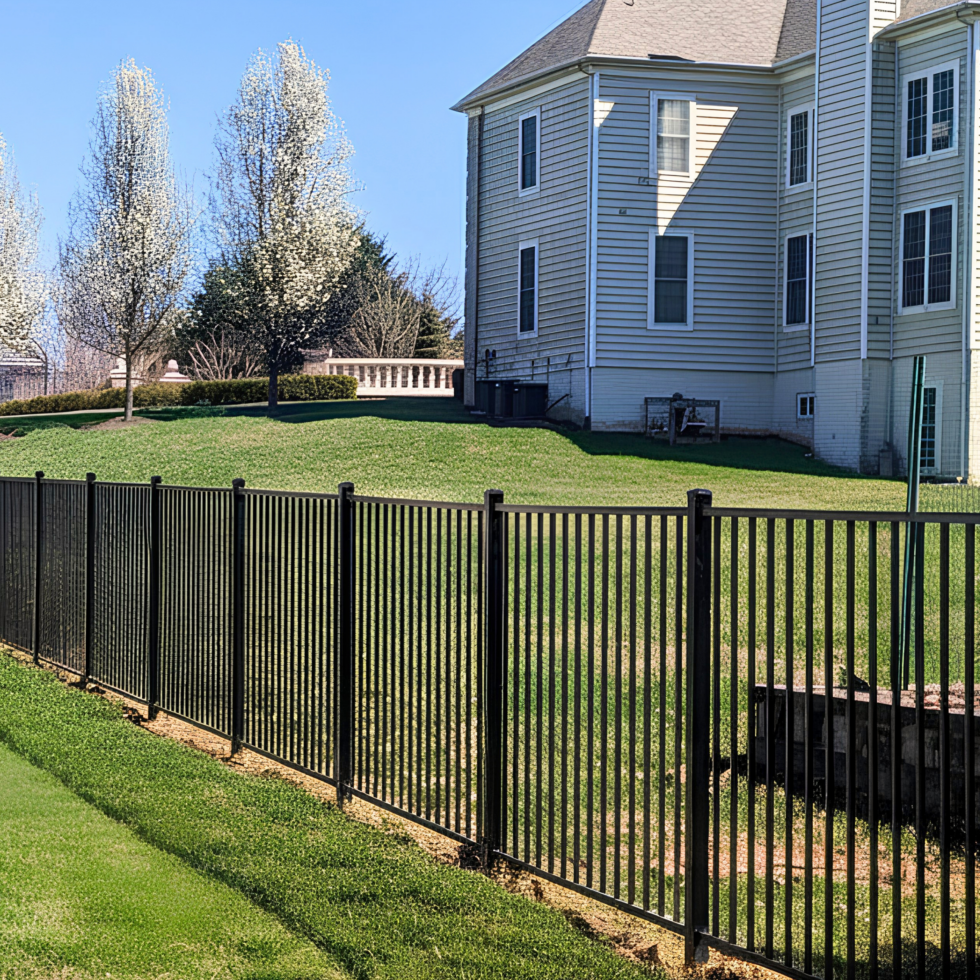
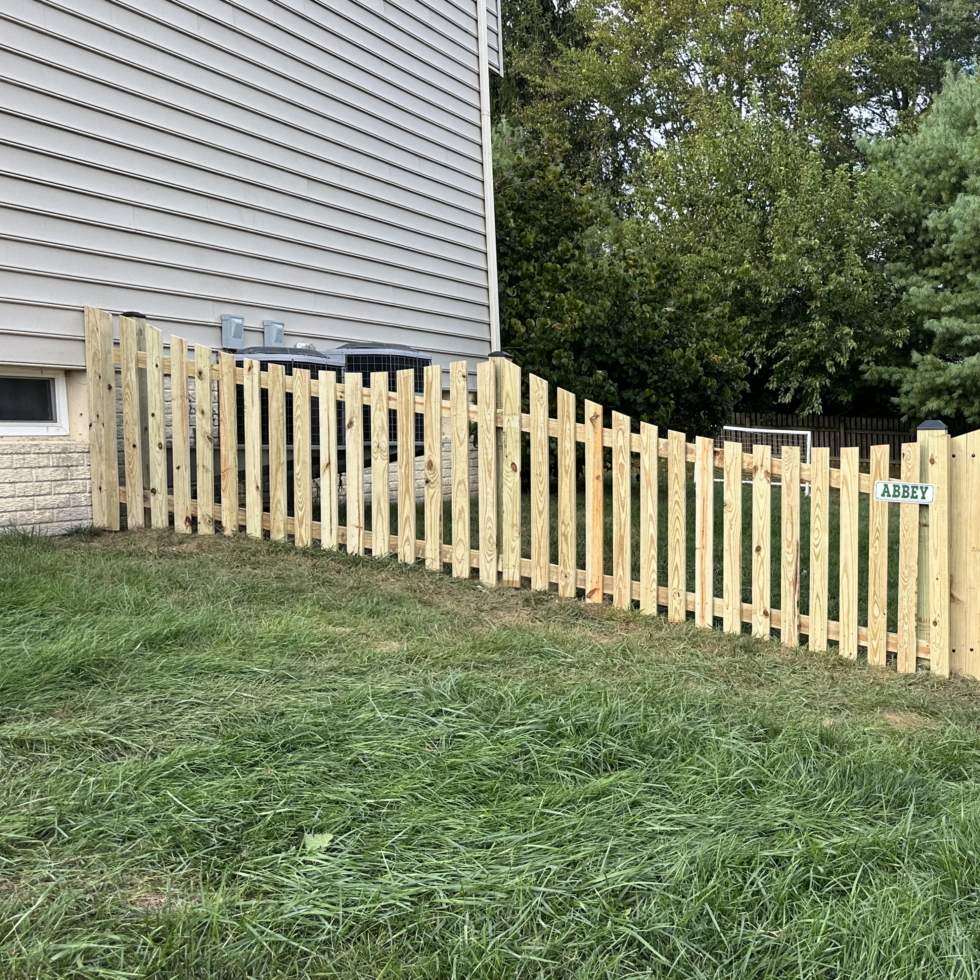
A: The best material depends on your budget, desired appearance, maintenance preferences, and functional needs. Wood offers natural beauty, PVC/Vinyl provides low maintenance, Aluminum offers elegance and durability, and Chain Link is a cost-effective option for security and containment. However, this is something that should be discussed with your site estimator during the consultation, as every property and installation condition is different.
Q: What is the difference between cedar and pressure treated materials?
A: The primary differences between cedar and pressure treated materials are the longevity and stability of the lumber.
Cedar, usually white or western red, is a dense, yet lightweight material with a natural tendency to resist rotting and infestation as long as it is kept above ground contact. While cedar is a more stable material, it does not have the longevity of pressure treated. Cedar is considered more environmentally friendly option.
Pressure-treated lumber, usually southern yellow pine, is treated with Micronized Copper Quaternary (MCQ) preservatives that provide outstanding durability and longevity.
Abbey Fence & Deck readily offers both types of materials for any and all of your fencing/decking needs.
Q: What can I expect to happen to my wood fence? In one month? In six months? In one year?
A: At one month: Your fence will still maintain original characteristics with some minor warping. Fence will have possible checks in materials that are a natural occurrence and not a structural defect.
At six months: You will notice fading of color, minor shrinkage and some warping of materials. Gates may need to be adjusted. Fence materials will have dried out. However, we repair fences for our customers. While the natural warping and movement of wood is not covered under our warranty, gate adjustments are covered for up to 2 years from the date of installation.
At one year: By now, fence color has faded, almost all shrinkage and warpage has occurred. Your fence is now weathered.
Q: How should I care for my wood fence?
A: At one month: No special care is needed to maintain the appearance of your fence.
At six months: You should apply a topical water repellant to enhance the pressure-treatment. Check gate hinges and adjust if necessary. Repeat every year thereafter.
At one year: Once a water repellant/stain has been applied, no further care is needed beyond periodic inspections and hardware maintenance.
Q: Do you offer painting, staining, or sealing services for wood fences and decks?
A: No, ABBEY does not provide this service.
Q: What is the difference between a privacy fence and a picket fence?
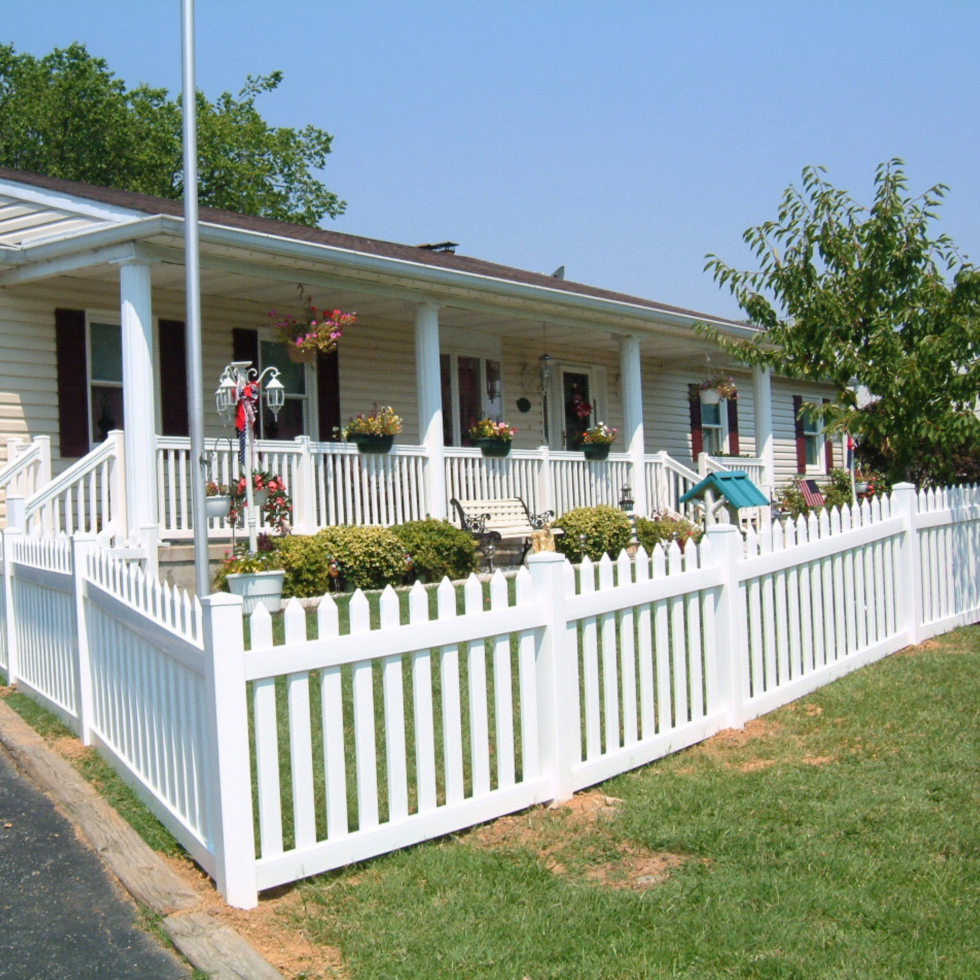
A: Privacy fences are typically 6 to 8 feet tall with solid boards designed for privacy, security, and noise reduction. Picket fences are generally 3 to 4 feet tall with spaced pickets designed to define boundaries while maintaining visibility.
Q: Can I match my new deck’s railing style to my new fence?
A: Yes, absolutely. Abbey Fence & Deck offers a variety of matching materials and styles, including vinyl, wood, aluminum. This is something that should be discussed with your site estimator during the consultation, as every property and installation condition is different.
Q: What is composite decking, and why should I consider it over wood?
A: Composite decking is made from a blend of recycled wood fibers and plastic. It requires no sanding, staining, or sealing and is highly resistant to fading, scratching, and mold. This is a high budget option, but could save you in the long run for lesser upkeep.
Q: Do you perform deck repairs or deck resurfacing?
A: We typically don’t, often times we recommend a full replacement of a deck. We may perform repairs on decks originally built by Abbey Fence & Deck on a case-by-case basis. Please contact us to discuss your project and determine eligibility.
Q: Do you install patios or pavers?
A: No, Abbey Fence & Deck does not install patios or pavers.
Q: Do you install gazebos?
A: No, gazebo installation is not a service we currently offer.
Q: Do you sell fencing or decking materials directly to homeowners?
A: No. Abbey Fence & Deck is a full-service contractor, and we do not sell fencing, decking, or railing materials separately. We specialize in supplying and professionally installing the products we offer to ensure quality, performance, and warranty coverage.
Q: Do you install gazebos?
A: No, gazebo installation is not a service we currently offer.
Q: Can I purchase materials from Abbey Fence & Deck and install them myself?
A: No. We do not operate as a retail supplier or material distributor. Our materials are available exclusively as part of our professionally installed fence and deck projects, allowing us to maintain our quality standards and workmanship warranty.
Timeline, Process & Communication
Q: I paid my deposit. What happens next, and what kind of communication should I expect from the company?
A: Once your deposit is processed, our team will finalize project details, begin permit applications if required, order materials, and schedule your installation. Throughout the process, we will keep you informed regarding scheduling, permitting status, and installation timelines.
Q: How long does it typically take between paying my deposit and getting the fence or deck installed?
A: Timelines vary depending on permit requirements, project complexity, material availability, weather conditions, and seasonal demand. However, before your deposit is processed, you will be provided with an estimated project timeline during the contract signing process, so you’ll have a general idea of when to expect your installation. Your project coordinator will keep you informed throughout the process and provide updates as needed.
Q: How long does the actual on-site installation take once the crew arrives?
A: Installation times vary depending on project size, site conditions, material type, and complexity. Most residential fence projects are completed within a few days, while larger or custom projects may require additional time.
Q: Do I need to be home during the installation?
A: You do not necessarily need to be home during the entire project, but we do require an adult to be present at the start of day one and during the final walkthrough.
Q: Can you build a deck over an existing concrete patio?
A: Yes, in many cases we can construct a low-profile deck directly over an existing concrete patio, provided conditions allow for proper drainage and clearance.
Payments, Financing & Warranty
Q: How do I pay you, and what is the expected payment/deposit schedule?
A: Payment schedules vary depending on whether the project is residential, financed, or commercial. Your sales representative will review the applicable deposit requirements and payment milestones during the proposal process.
In most cases, the remaining balance is due immediately upon substantial completion of the project. Substantial completion means the project is sufficiently complete and usable for its intended purpose, with only minor touch-ups or warranty-related items, if any, remaining.
Q: How much will an average fence cost me?
A: The price of a fence varies widely based on height, footage, ground conditions, materials used, and project complexity. We provide customized estimates for every project. Learn the key differences between fencing materials, including their benefits, maintenance requirements, durability, and estimated pricing. For a more detailed comparison, visit our FENCE MATERIALS GUIDE
Q: What type of warranty will I have on my fence/deck?
A: You will have an industry-leading limited lifetime warranty covering workmanship and labor for as long as you own your fence or deck. Gates are covered for two years from the completion date.
Please visit our Warranty FAQ page for detailed information about coverage, exclusions, and warranty terms.
Q: I have a question about my warranty.
A: Please visit our Warranty FAQ page for detailed information about coverage, exclusions, and warranty terms.