

How to Maintain Your Wood Fence in Maryland

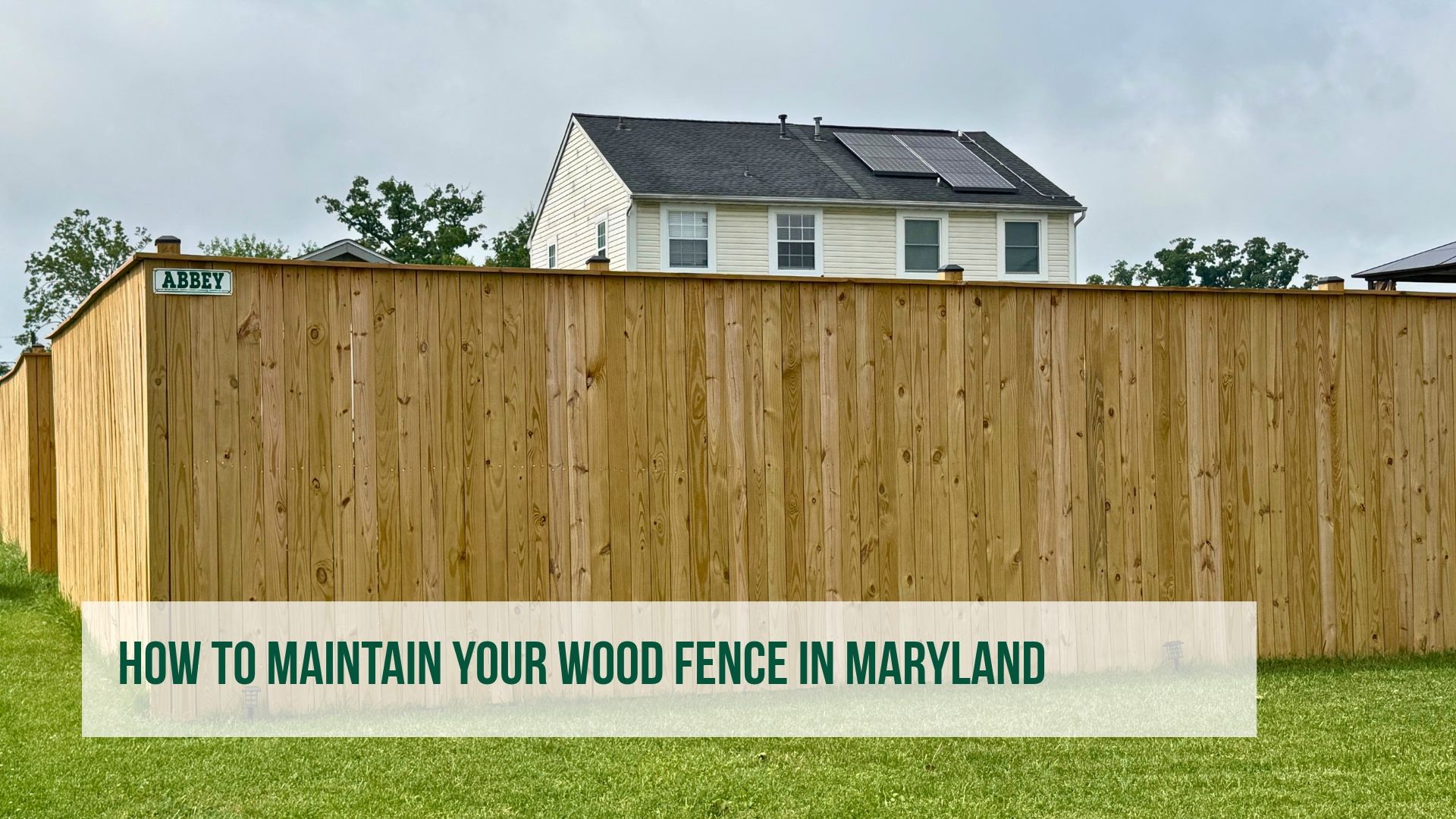
Well-maintained natural wood fence protected with waterproof stain against Mid-Atlantic humidity and winter freezes in Maryland.
Natural wood fencing adds timeless beauty to any Maryland property. However, with our humid Mid-Atlantic summers and unpredictable freeze-thaw winter cycles, timber requires active care to prevent rot, warping, and discoloration.

1. Clean and Power Wash Annually

– Remove Organic Buildup: Scrub away algae, moss, and mildew that thrive during humid Maryland summers.
– Pressure Wash Gently: Use a wide-angle nozzle at a low PSI setting to clear embedded dirt without gouging the wood fibers.
A newly installed wooden fence with a gate, situated in a grassy yard. The fence is made of vertical wooden planks, with some leaning slightly. Behind the fence, there are two buildings: one with gray siding and a window, and another with brown siding and two small windows. The fence has a black latch on the gate, and the grass in front appears well-maintained. This is a "bob fence" style. A newly installed wooden fence with a gate, situated in a grassy yard. The fence is made of vertical wooden planks, with some leaning slightly. Behind the fence, there are two buildings: one with gray siding and a window, and another with brown siding and two small windows. The fence has a black latch on the gate, and the grass in front appears well-maintained. This is a "bob fence" style.

3.Prepare for Maryland Winters

– Clear Ground Debris: Keep wet autumn leaves, soil, and mulch cleared away from the base of fence posts to prevent moisture retention and fungal decay.
– Use Pet & Wood-Safe De-Icers: Avoid harsh chemicals or heavy rock salt near fence lines during winter freezes, as they damage the wood finish and corrode metal fasteners.
A newly constructed wooden fence with horizontal slats runs along a grassy area. The fence is made of light-colored, untreated wood and is supported by evenly spaced vertical posts. Behind the fence, there are trees with green foliage, and the sky above is partly cloudy with patches of blue. The scene appears to be in a rural or suburban setting.
A newly installed wooden privacy fence with vertical posts and horizontal planks, running along a grassy yard. The fence is made of light-colored, unfinished wood, and appears sturdy and well-constructed. In the background, tall evergreen trees and leafless deciduous trees are visible, indicating it might be late fall or early spring. The scene is outdoors in a residential area.

2. Seal or Stain Every 2–3 Years

– Block Moisture Infiltration: Apply a high-quality, weatherproof sealant or exterior stain to shield wood against rain and snow melt.
– UV Protection: Staining helps protect the wood from turning grey under harsh summer sunlight.
A newly constructed wooden fence with vertical slats, installed along the side of a house with beige siding and brick foundation. The fence features a small gate labeled "ABBEY" and is situated on a grassy lawn. Behind the fence, there are trees and a neighboring yard, with some HVAC units visible near the house. The scene appears to be in a suburban residential area.

4. Tighten and Inspect Hardware

– Inspect Fasteners: Check for loose nails or rust-damaged screws after major storms and tighten structural hardware to keep panels stable against strong winds.